
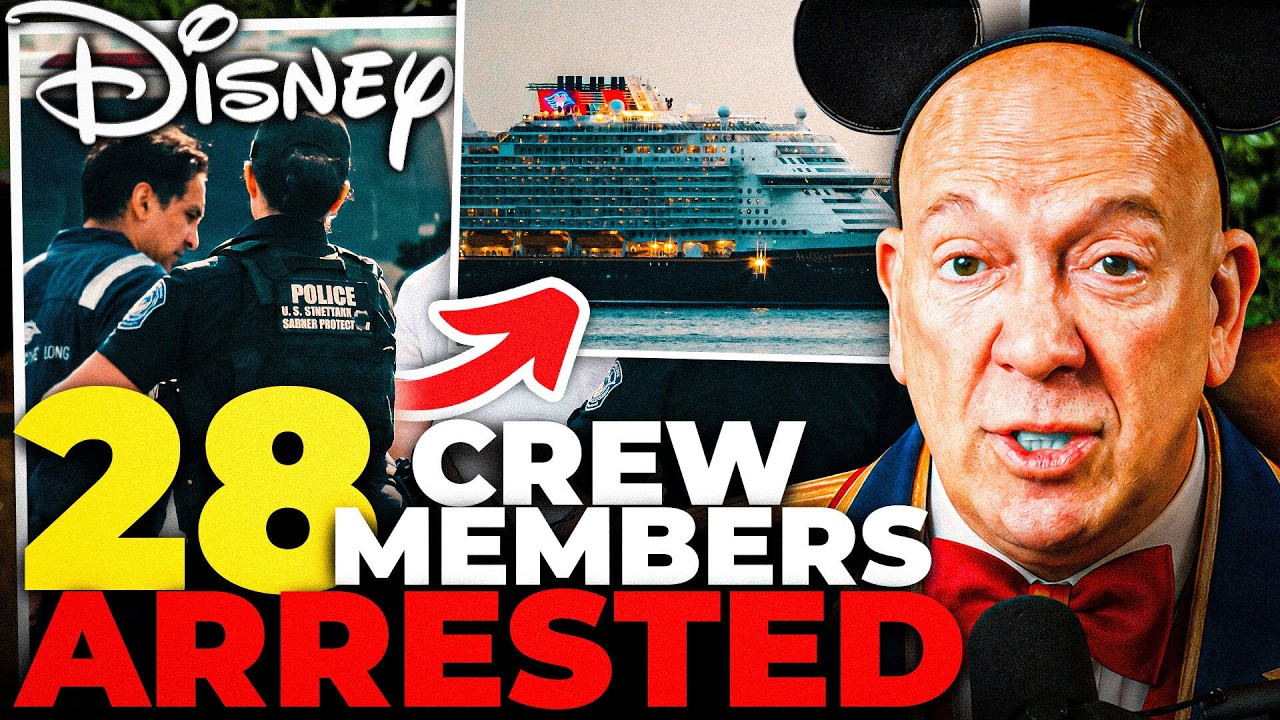
For millions of travelers each year, a cruise represents the ultimate escape from reality. It is a carefully curated world of luxury, leisure, and entertainment, where corporate branding promises absolute safety, particularly for families traveling with young children. However, a major federal law enforcement operation at the Port of San Diego shattered this pristine illusion. The sweeping investigation exposed a deeply disturbing undercurrent operating beneath the polished decks of several major cruise liners.
What began as a typical turn-around day at the B Street Pier quickly evolved into a multi-agency crackdown targeting international maritime workers. The operation sent shockwaves through the travel industry, forcing a national conversation about security, background checks, and the dark realities of digital crime on the high seas. This was not a minor administrative oversight or an isolated incident of workplace misconduct. Instead, it was a coordinated effort to dismantle a network of individuals involved in the exploitation of children, throwing a harsh spotlight on the massive vulnerabilities inherent in global maritime employment.
The Unfolding of Operation Tidal Wave
The enforcement actions were part of a specialized, multi-day federal initiative known as Operation Tidal Wave. Orchestrated by U.S. Customs and Border Protection alongside Homeland Security Investigations, the operation targeted specific individuals based on highly vetted intelligence. The initial catalyst for the sting came from the National Center for Missing and Exploited Children, an organization that tracks digital signatures and reports related to the illegal distribution of illicit material online.
Between April 23 and April 27, federal agents systematically boarded eight different cruise ships docked at the Port of San Diego. This was not a random sweep; it was a surgical strike designed to intercept targets before they could depart into international waters, where jurisdictional boundaries become notoriously murky. By the time the multi-day operation concluded, federal officers had intercepted, interviewed, or detained 28 cruise ship crew members. The sheer scale of the operation across multiple ships indicated that authorities were dealing with a widespread systemic issue rather than a localized anomaly.
The Shocking Scene at the Port
For the passengers aboard the targeted vessels, the reality of the situation hit with sudden, jarring clarity. On April 23, passengers disembarking from the Disney Magic cruise ship witnessed federal agents moving swiftly onto the pier. Roughly ten workers from that specific ship were taken into custody. What made the scene particularly haunting for onlookers was that these crew members were led away in handcuffs while still wearing their official company uniforms.
The immediate psychological impact on families was profound. Passengers who had just spent days interacting with these workers were suddenly forced to confront the reality of who these individuals truly were. One passenger recounted that two of the detained employees had been directly serving her family for the duration of their four-day vacation. One of them was their personal dining host, an individual they had shared breakfast with just hours before the handcuffs were wrapped around his wrists.
Witnesses noted that while the employee had seemed slightly rushed and distraught that morning, they had assumed it was merely the typical stress of a ship turnaround day. The revelation that their trusted host was being detained under suspicion of severe federal crimes left families feeling deeply compromised and vulnerable.
Dissecting the Charges and Demographics
As federal agencies began releasing official statements to clarify the nature of the raids, initial rumors of immigration or visa violations were quickly debunked. U.S. Customs and Border Protection confirmed that the boarding operations were explicitly tied to ongoing Child Sexual Exploitation Material (CSEM) enforcement. Out of the 28 individuals cross-examined by federal agents, authorities verified that 27 were directly implicated in the network.
The legal boundaries of the charges were extensive, covering the receipt, possession, transportation, distribution, or viewing of these illegal digital materials. The demographic breakdown of the suspects illustrated the deeply international nature of cruise ship staffing:
- The Philippines: 26 suspected crew members
- Portugal: 1 suspected crew member
- Indonesia: 1 suspected crew member
Because the crimes involved non-U.S. citizens operating on foreign-flagged vessels within U.S. territorial waters, the immediate legal recourse took a specific path. Following the revocation of their maritime visas, the individuals were processed and systematically returned to their home countries, where international law enforcement agencies would continue to monitor and coordinate with federal authorities regarding ongoing criminal prosecutions.
Corporate Fallout and the Contract Labor Dilemma
The fallout from Operation Tidal Wave hit corporate public relations departments with maximum force. Brands that trade heavily on family safety, most notably Disney Cruise Line, found themselves in a defensive damage-control posture. In official statements, corporate representatives emphasized a strict zero-tolerance policy for this manner of behavior, confirming that they had cooperated fully with federal law enforcement throughout the investigation and that the individuals involved were no longer with the company.
However, the corporate messaging also highlighted a complex reality of the modern cruise industry: the reliance on third-party contracting. Disney noted that while some of the implicated workers were directly tied to their vessels, the majority of the 28 individuals arrested across the port were not direct employees of their specific cruise line. Other major lines, including Holland America, which saw employees removed from the MV Zaandam, similarly issued statements emphasizing their cooperation with local and federal jurisdictions.
“We have a zero-tolerance policy for this type of behavior and fully cooperated with law enforcement. These individuals are no longer with the company.” – Official statement from cruise line representatives.
This distinction brings to light the fragmented nature of maritime labor. Massive cruise ships operate as floating cities, frequently outsourcing their culinary, entertainment, cleaning, and maintenance operations to global staffing agencies. This multi-layered hiring process creates significant gaps in direct corporate oversight, making it difficult for an American corporate entity to maintain absolute scrutiny over the background and daily digital activities of thousands of international workers.
Broader Vetting and Security Realities at Sea
The San Diego arrests have sparked an intense debate regarding the adequacy of background checks within the global maritime sector. When a cruise line hires crew members from various nations, they rely heavily on the local police clearances provided by those home countries. However, the digital landscape has evolved far faster than international background check protocols.
The incident raises critical logistical questions about how digital contraband is stored and shared aboard these ships. Crew members live in close quarters beneath the passenger decks, sharing communal living spaces and accessing the ship’s internal network or satellite internet infrastructures. The fact that a multi-day federal sting was required to root out nearly thirty individuals across eight ships suggests that digital monitoring protocols aboard commercial vessels require a massive overhaul. If networks of individuals can systematically transmit or view illicit material while at sea, maritime security frameworks are failing to address the realities of modern cybercrime.
Conclusion
Operation Tidal Wave has permanently altered the conversation surrounding cruise ship safety. It serves as a stark reminder that the corporate facades of magic, luxury, and worry-free relaxation cannot entirely insulate a vessel from the darker elements of human behavior. The swift action of Homeland Security Investigations and U.S. Customs and Border Protection successfully removed dangerous individuals from environments heavily populated by children, but the systemic vulnerabilities remain. Moving forward, the cruise industry faces the monumental task of rebuilding consumer trust, tightening its third-party labor vetting processes, and ensuring that the safety promised to families extends far beneath the surface of the physical ship.